August 2: Day 4, Aachen to Cologne
Aachen is pretty quiet on a Sunday morning. The nice cheap place I'm staying doesn't provide breakfast, and there's not much open at 8am on a Sunday. I find a few options on Google, check out a few places but the only place with pancakes opens at 9 so I wait for them. It was worth it.
The main thing I'm seeing today is the big open pit mine near Hambach. Open pit mines aren't particularly exciting, but this one is 8km across and has such an astronomical amount of lignite that it's worth developing 100M euro custom landship excavators to extract it. Which is exciting.
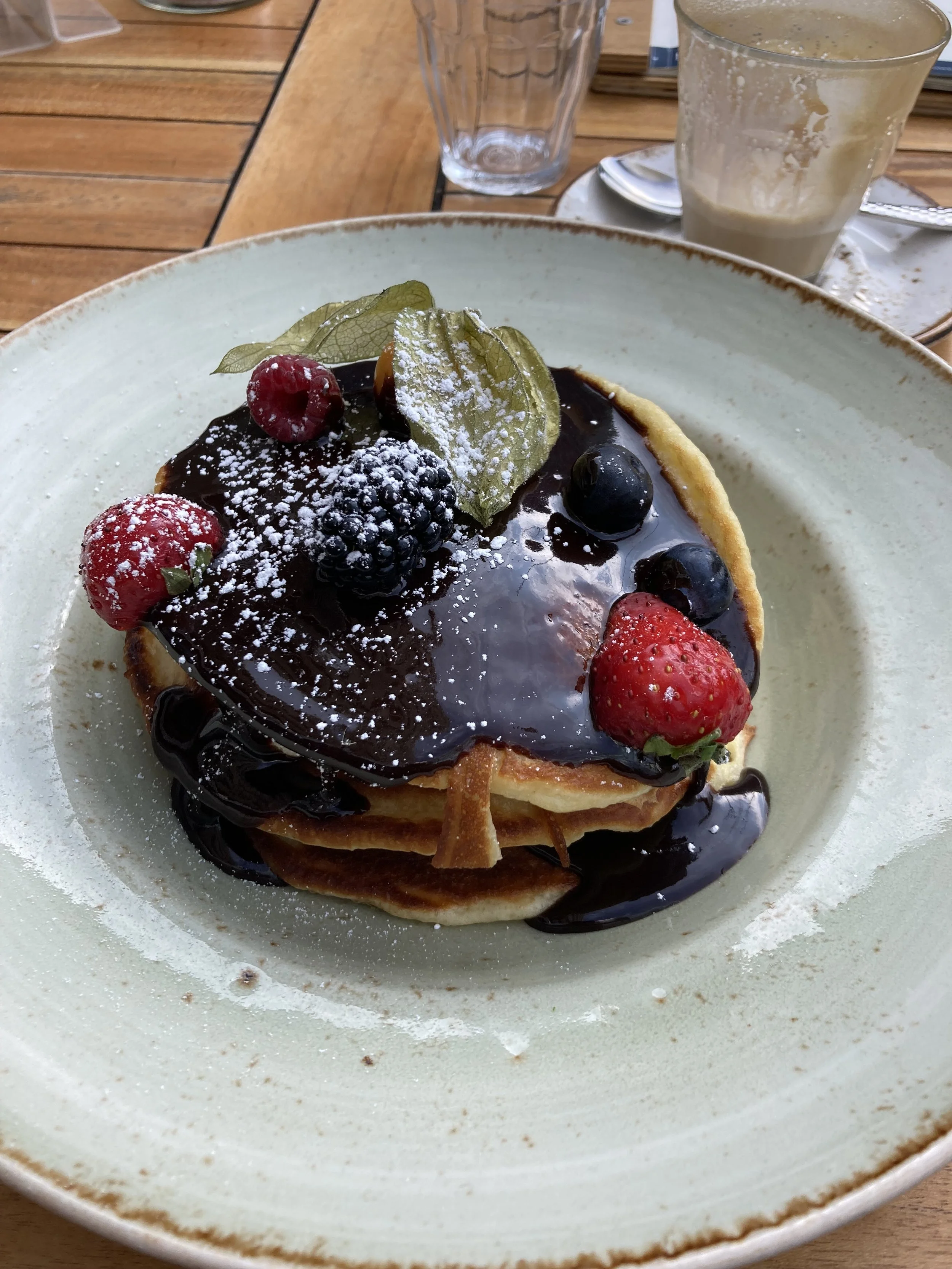
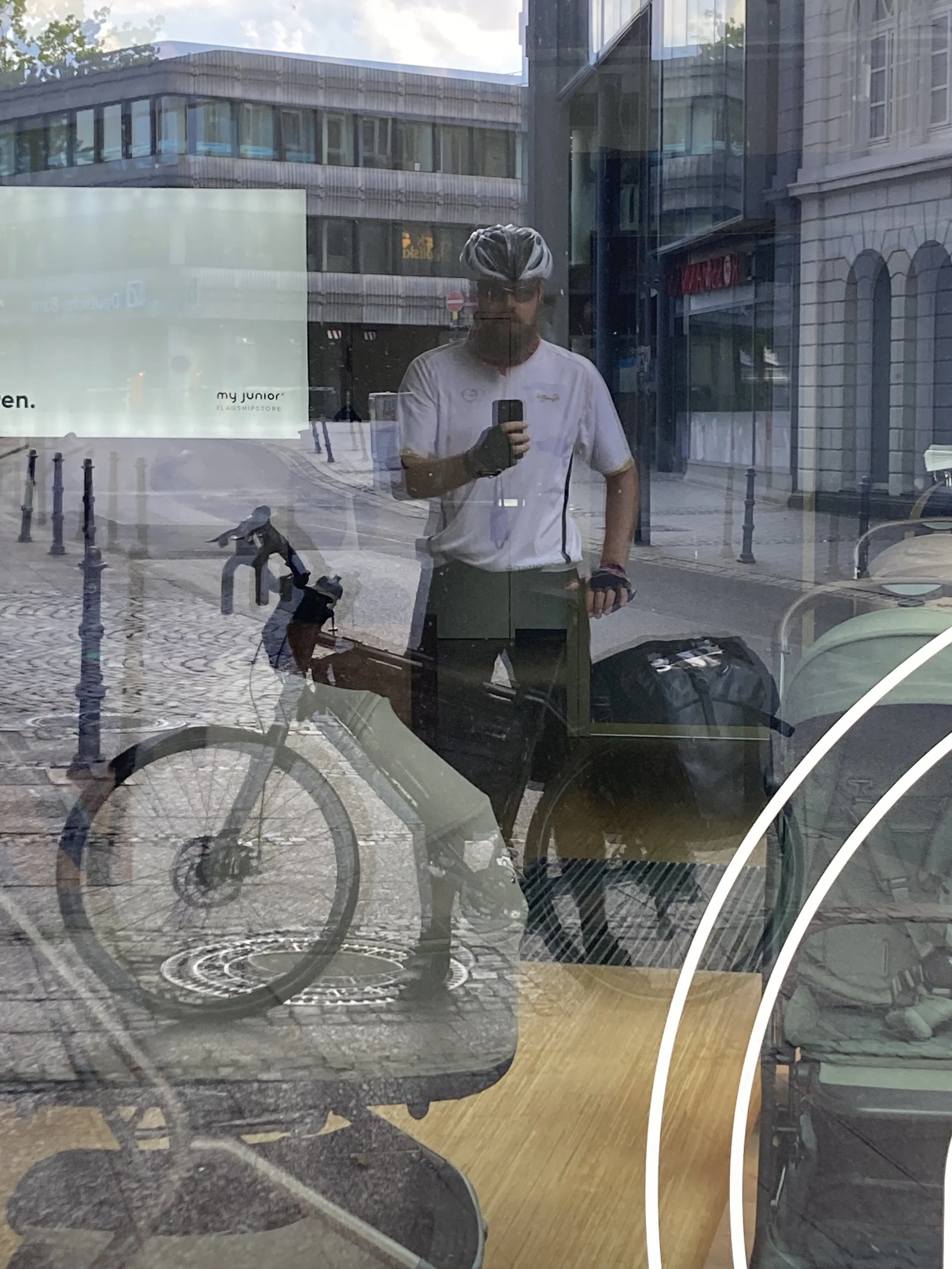
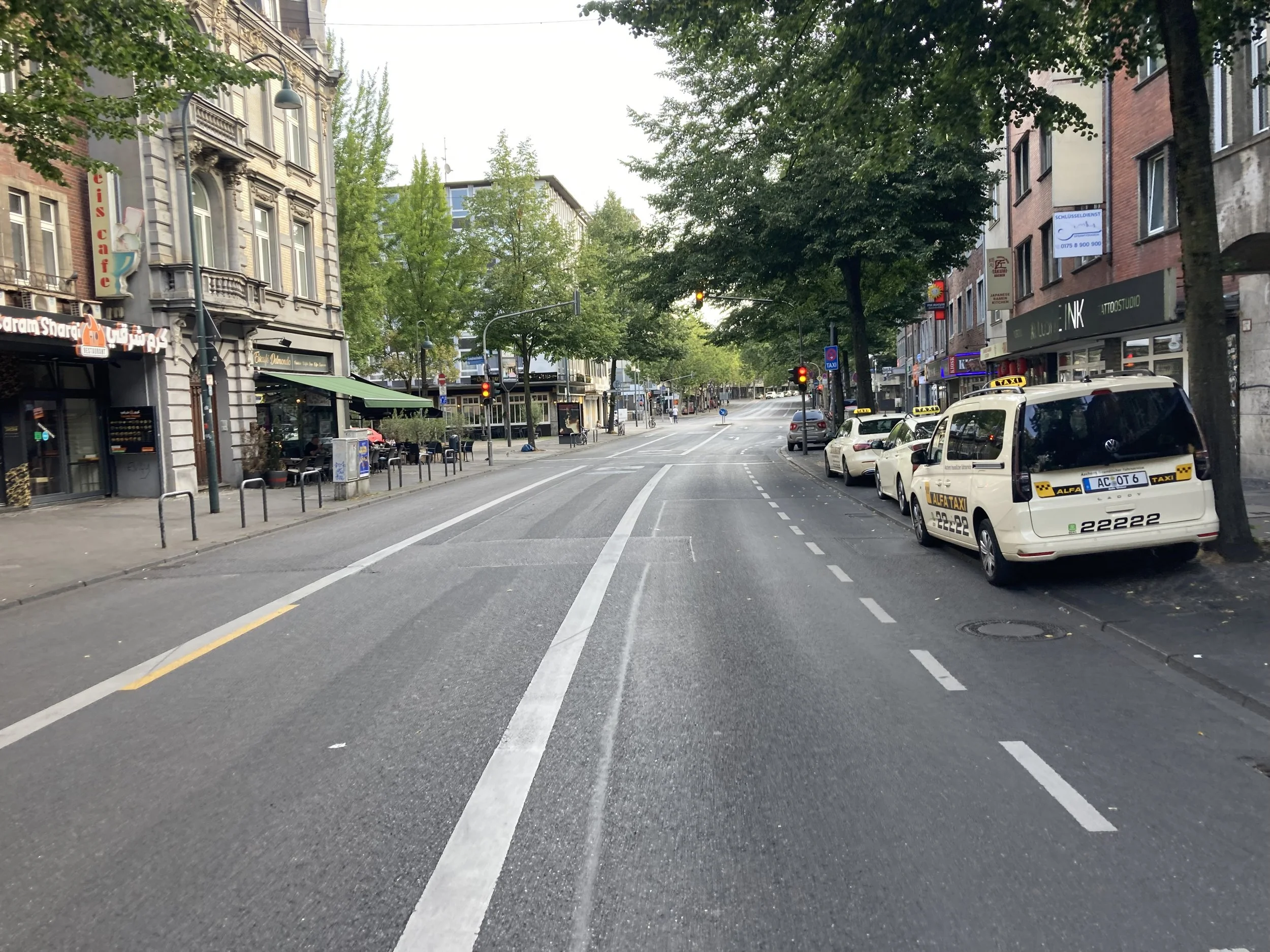
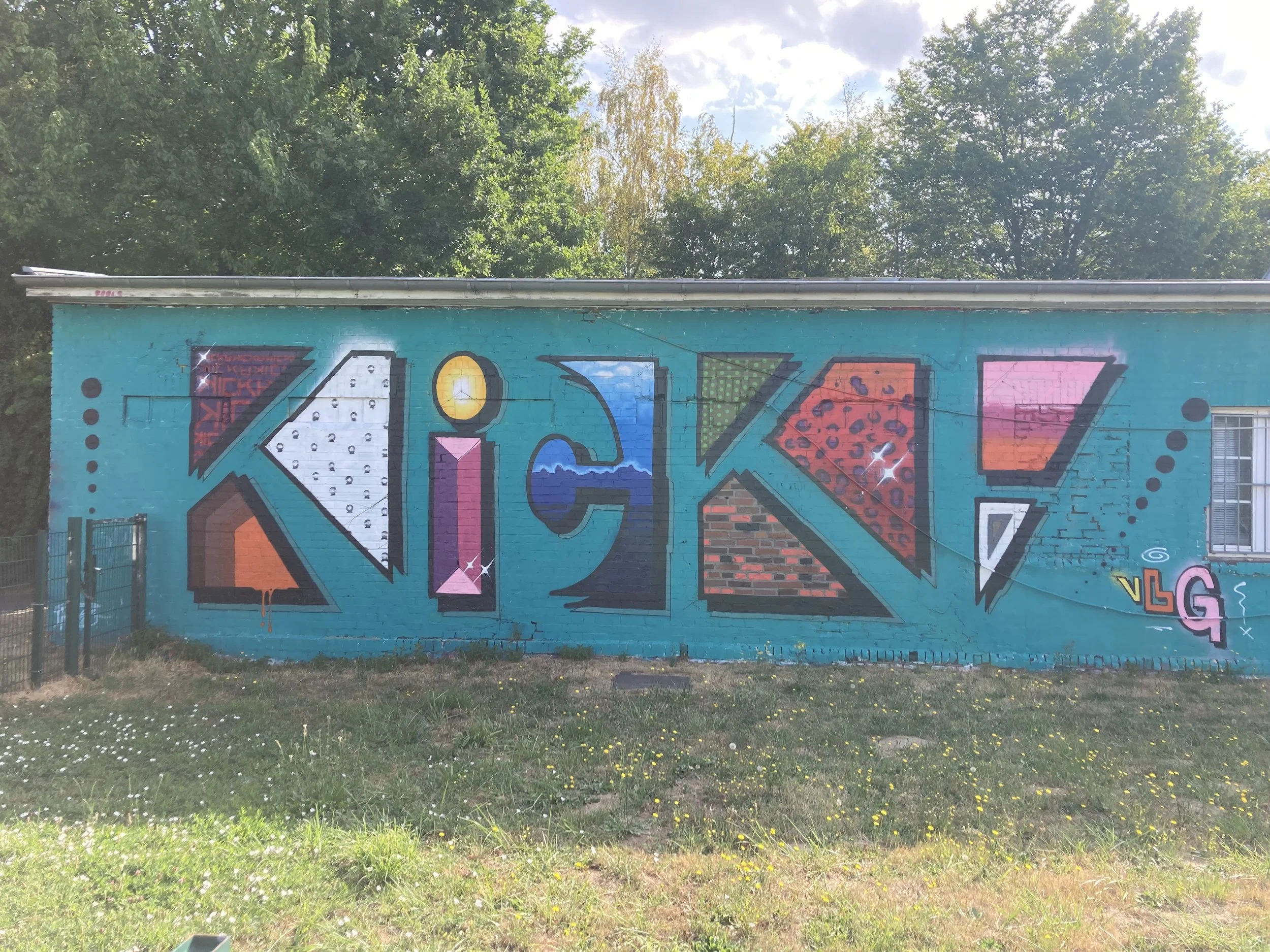
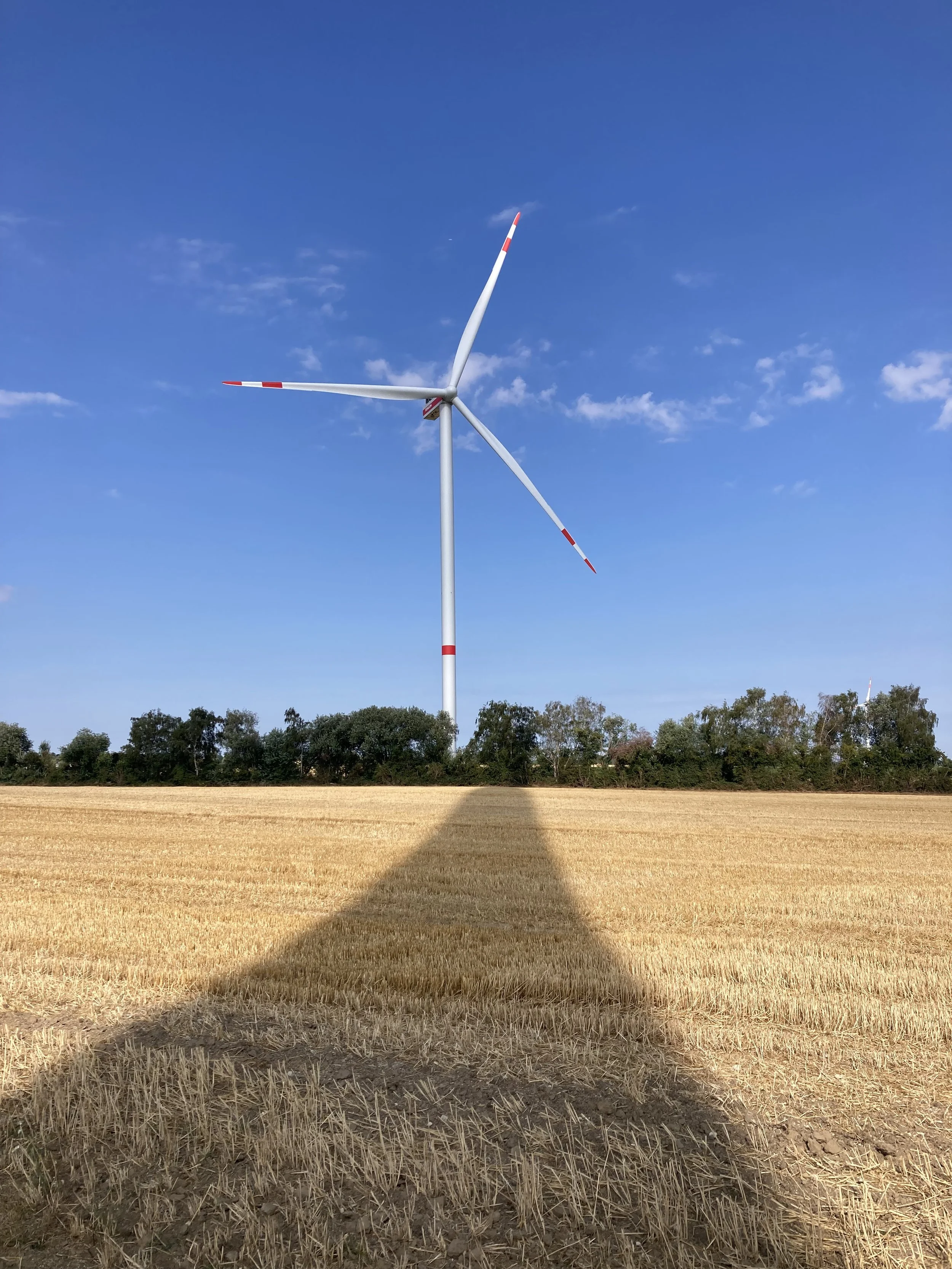
From left to right: pancakes that were worth waiting for. Departure photo. Aachen on a Sunday morning. Random wall art I liked. Passed through a windfarm.
Bagger 293 is the largest and latest (built 1999) but there's six altogether. They're called "bucket wheel excavators", which means a wheel of buckets which dig up the earth, and transfer it to conveyor belts that move it out to collection. Not interesting. What is interesting is the size: the wheel is 21m in diameter, the machine itself is 96m high, 225m long, weighs 14200 tonnes. It looks a lot like a crane, which is fair, because its role is to reach the bucket wheel out to a wall of earth, and move slowly sideways so it can excavate everything.
I was keen to see Bagger 293, and couldn't see where it would be so I planned out a route that went to the first possible viewing spot. I could see from the map that it was up a hill, but it wasn't clear that this was a park with walking trails and mountain bikers. And some really steep hills. And at the top, the path was such deep sand I couldn't stay upright and had to get off and push.
There was a good view of the mine, but I couldn't see anything clearly. I could see machines on far side, but that's at least five kilometers away and they were barely visible, even in photos. There was a cross-girder cranelike structure nearby but it was hidden by the hill so I couldn't tell what it was - in hindsight, it may well have been Bagger 293. It's hot, I've still got a long way to go, I can't see anything exciting; so I give up and take the long way out to avoid the sand, move on down the hill, and get started on the 15km to the next viewing spot I have lined up.
Seeing the Bagger series of machines at work is so popular that the mine has actual viewing locations. The next one is basically a lookout: again, nothing close enough to make out.
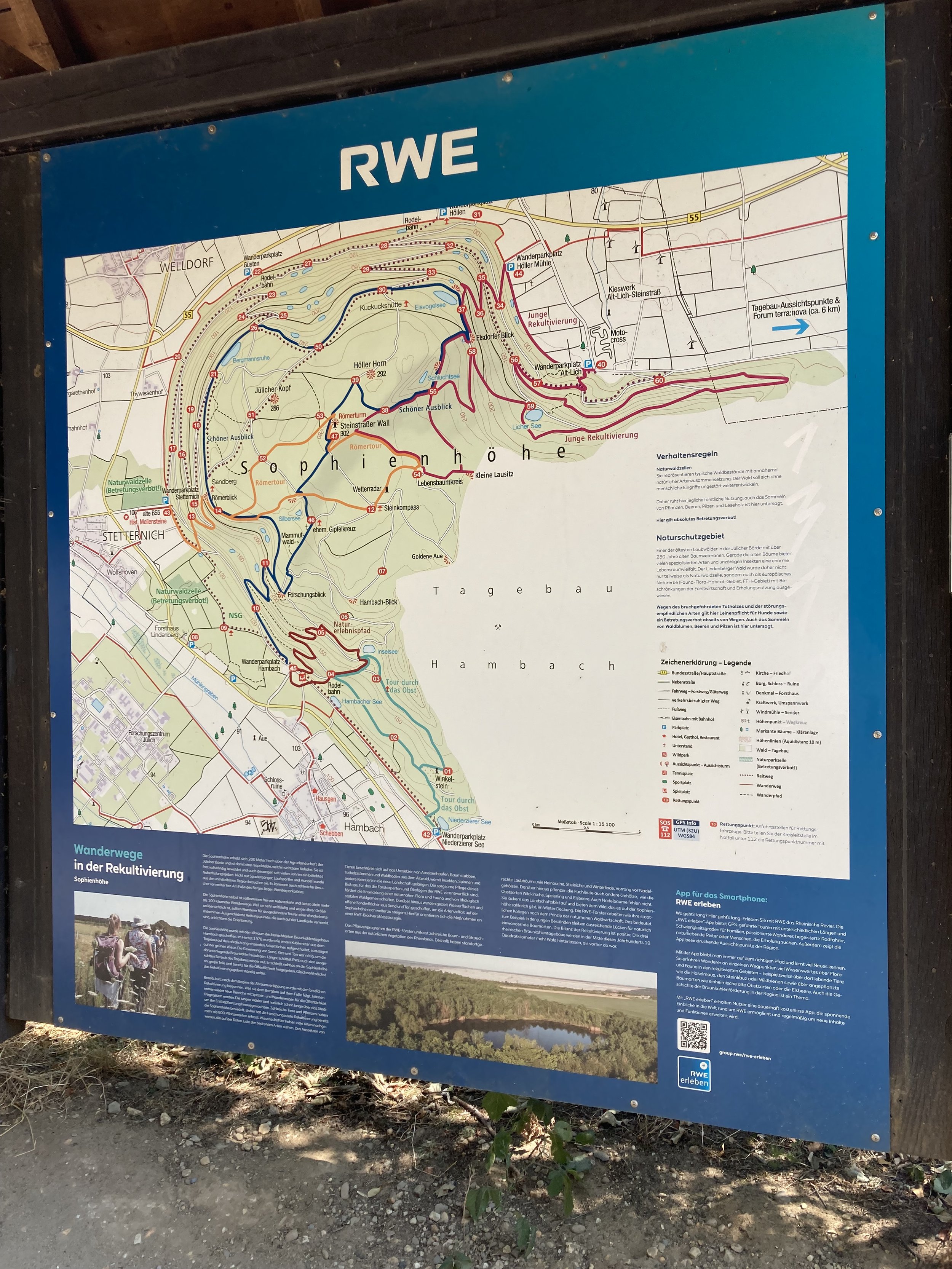
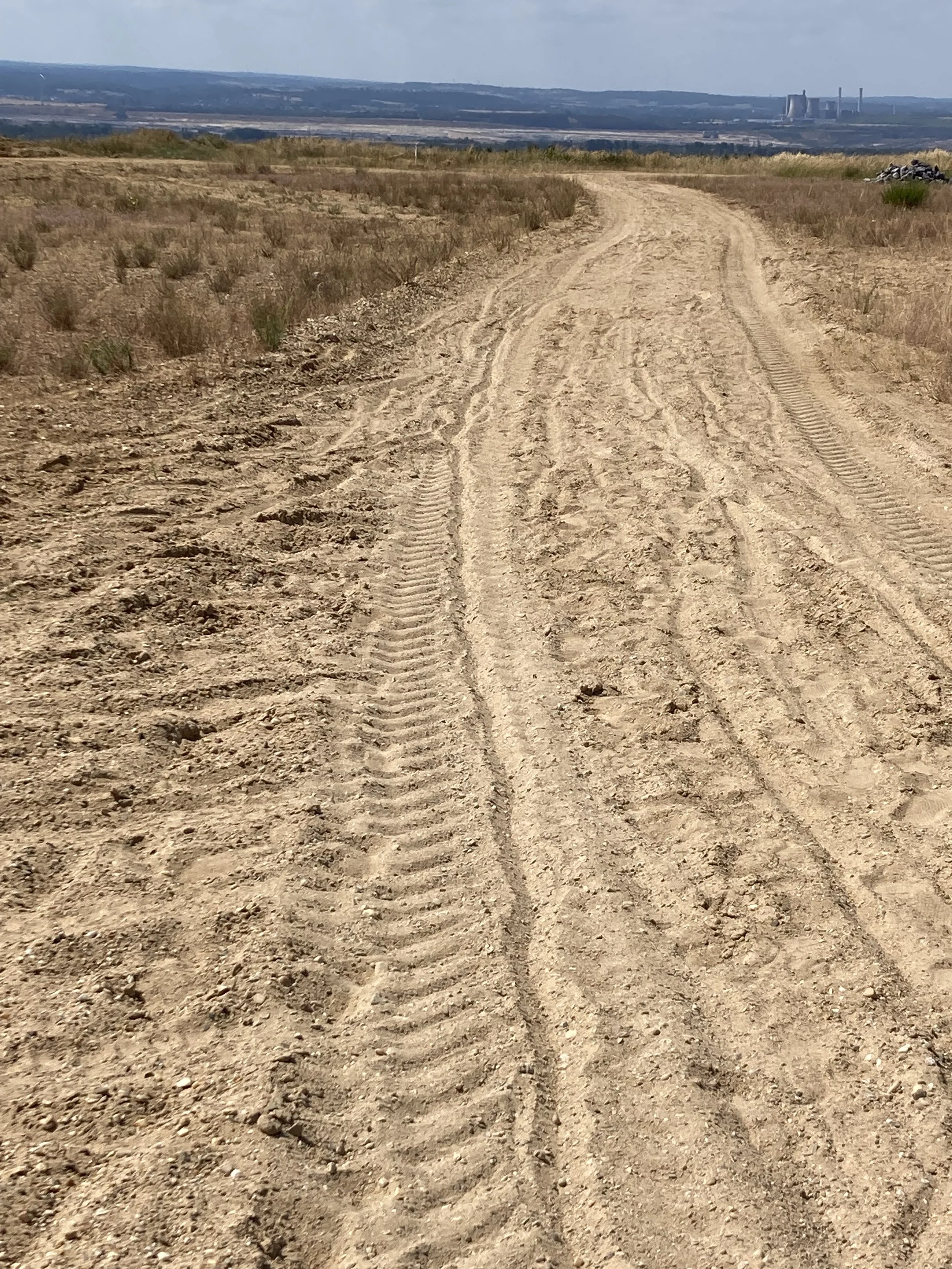

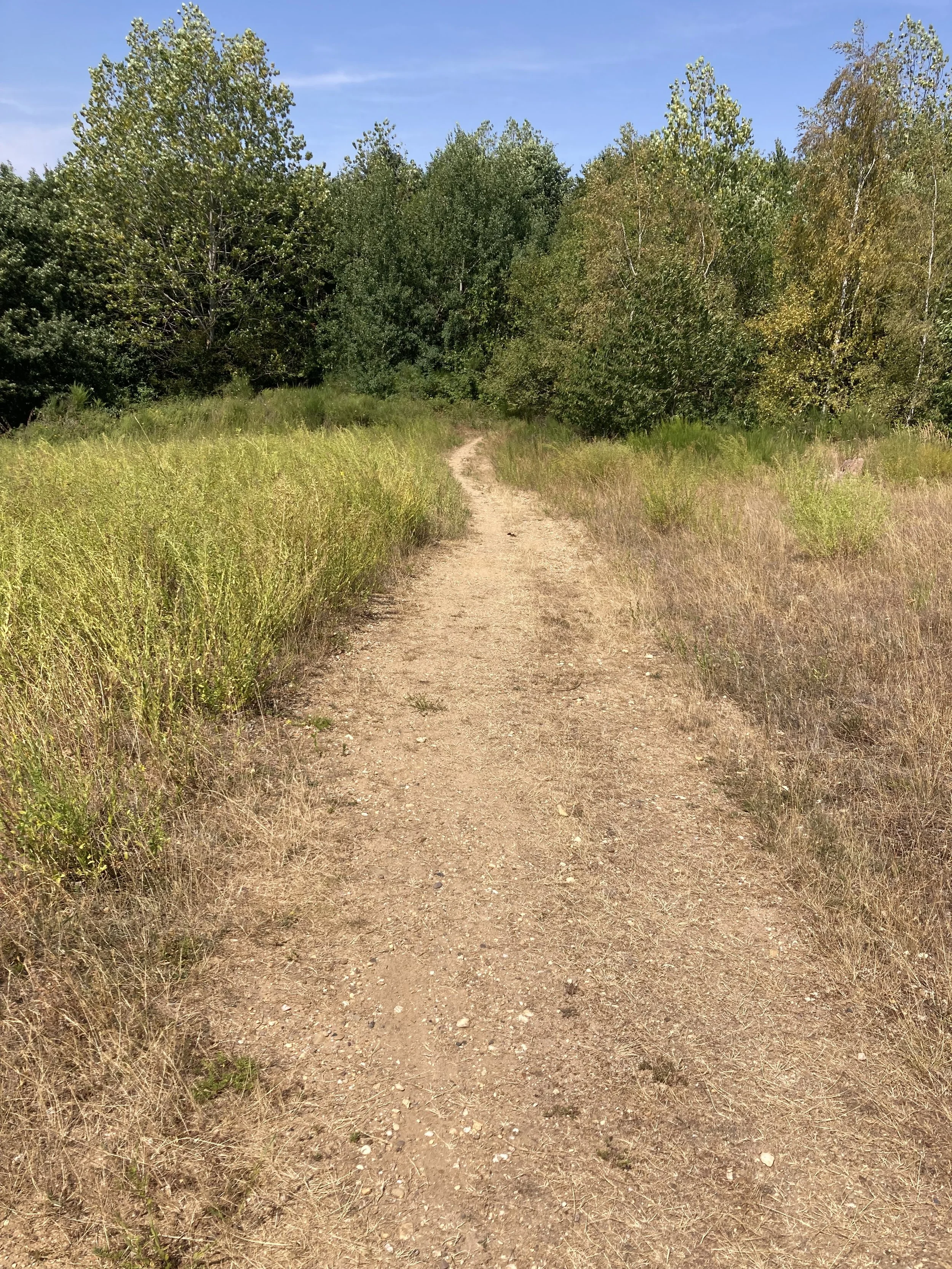
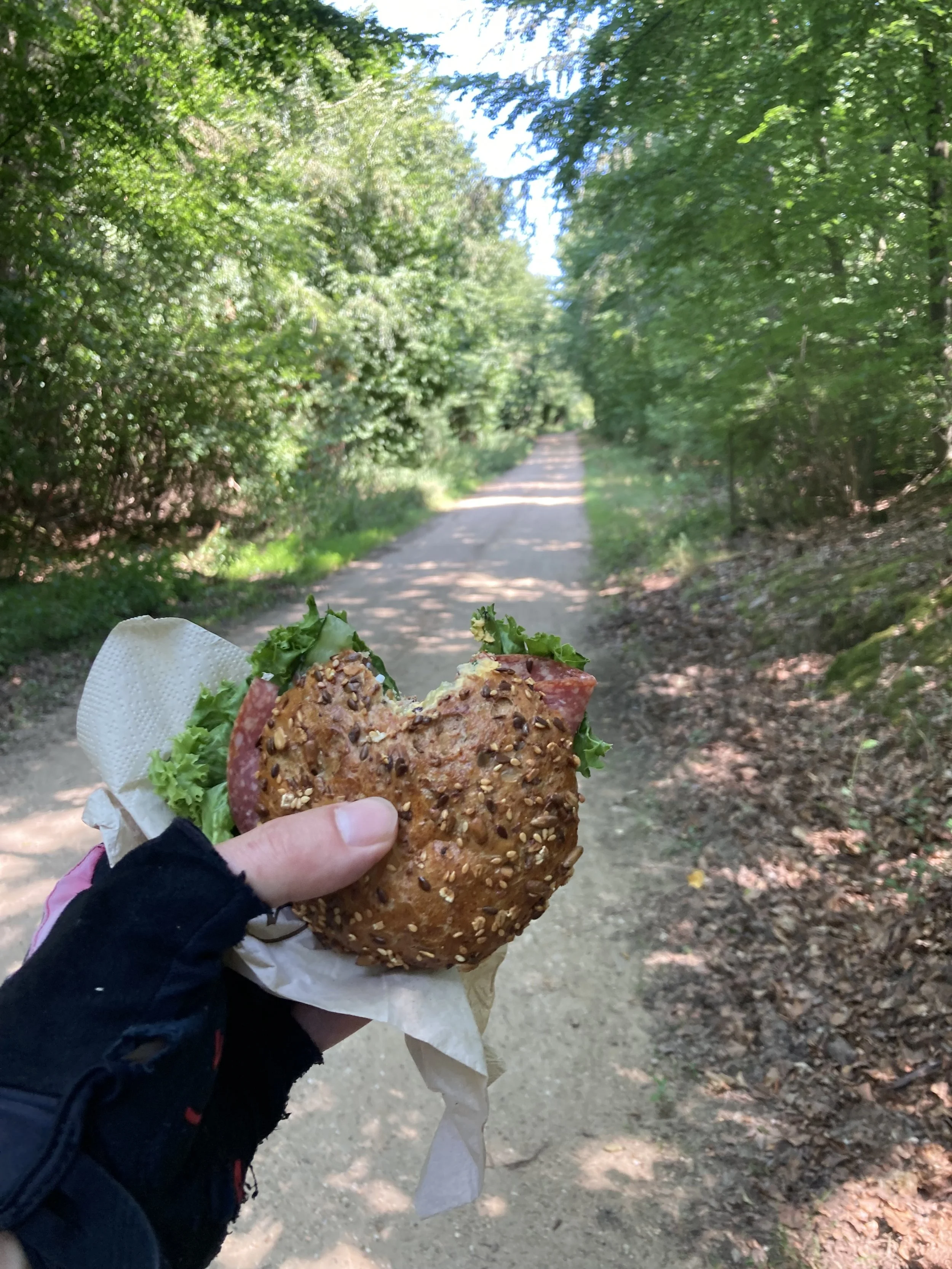
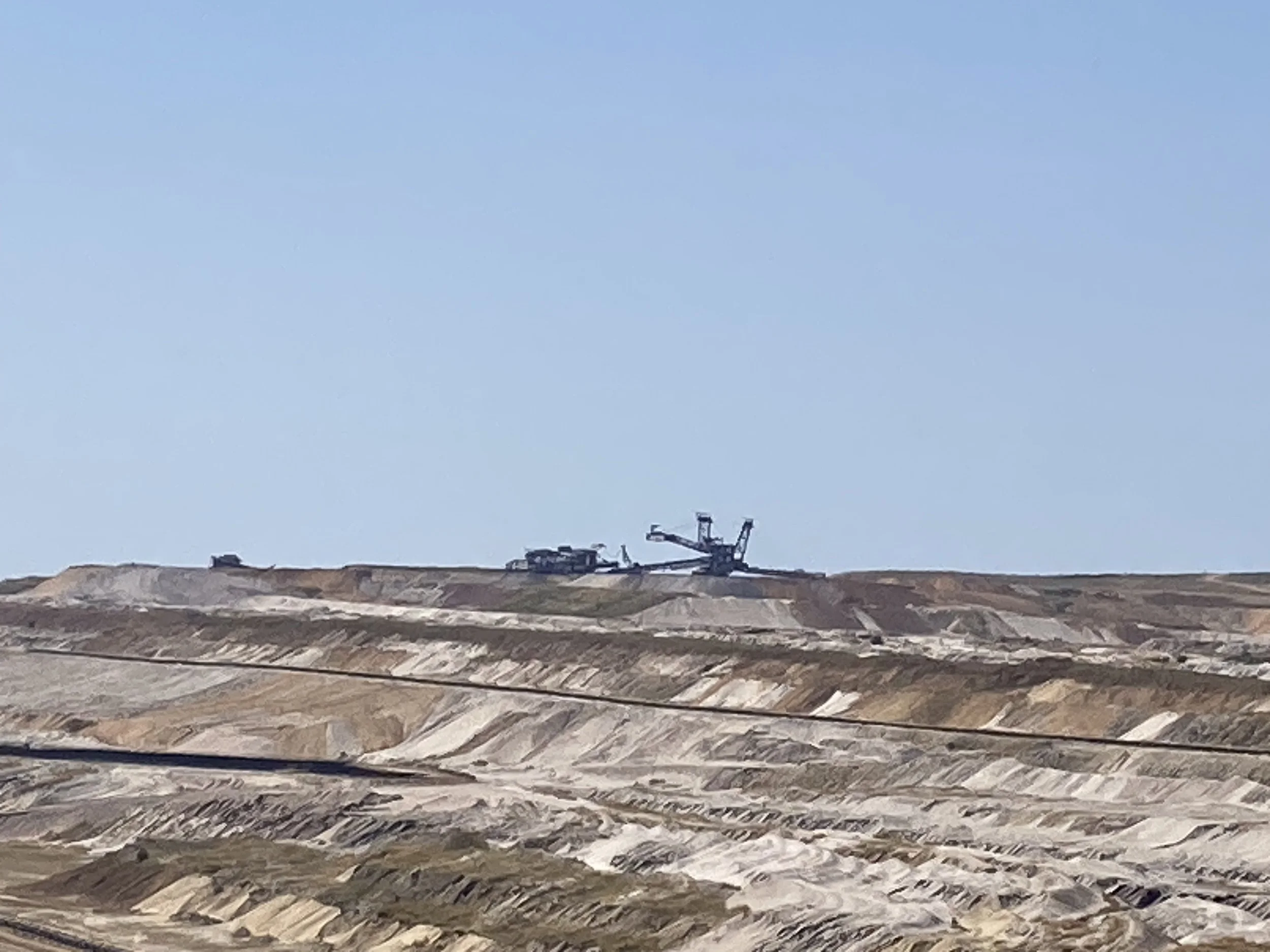
From left to right: cycling through the park. Got a photo of the map at the entrance, just in case the map app failed. The big rut in the middle is from me pushing the bike. Selfie with distant Bagger. Took a photo of the route but unusually, it turned out OK. Lunch view. At the lookout, this was the closest machine.
4km later I reach the main viewing spot: it has a cafe, exhibition hall and an outdoor viewing area of the mine with seats and umbrellas.
Again, all there is to see here is an open pit mine and some wandering mega-machines. But this is the reason I'm here! The nearest one is still a long way off, but it's close enough for me to see it moving, and I just make out the Bagger 291 sign on the side. I need to use maximum zoom on the phone to get a picture. It's visibly scooping out the earth, the connection to the conveyor belt system is clear, and it's good enough.
This is a Sunday but it's hard at work; I understand they run 8-hours shifts and keep operating 24/7. Bagger 291 is not 293 but it's good enough. I lurk in the shadow of an umbrella for a while, watch it do its leisurely work. At least it looks leisurely from this distance; each bucket holds 15cubic meters and one goes past each second so a lot of tons of earth are disappearing, in an unhurried way.
But you can only watch distant exavation for so long before it loses its Time to go. Two hours to Cologne.
Lunch has been a problem on this trip. I'd prefer to get a sandwich, because it's cheaper and faster, but I haven't figured out where to get them. aren't any good: they tend to have cakes and meat rolls and don't have salad or sandwiches. Supermarkets don't have sandwiches either, but they do have salads including pasta salads, which has been a fine option. Today is a Sunday when most stuff is closed, and in small towns almost everything is closed. I'm only passing small towns. So every time I reach one, I'll search around in Google Maps. Mostly there's no options. Until Jülich, when it's 12 and I'm starting to get nervous so I swing past a bakery called "Nobis Printen" and find it actually sells sandwiches! Finally.
Final sightseeing stop today is the inland lighthouse Helios. 250km from the sea. It was built in 1894/5 by Helios AG, who manufactured electrical equipment for lighthouses, and this was constructed for testing. Sadly, it's not open to the public. I get some photos and head on to the train station.
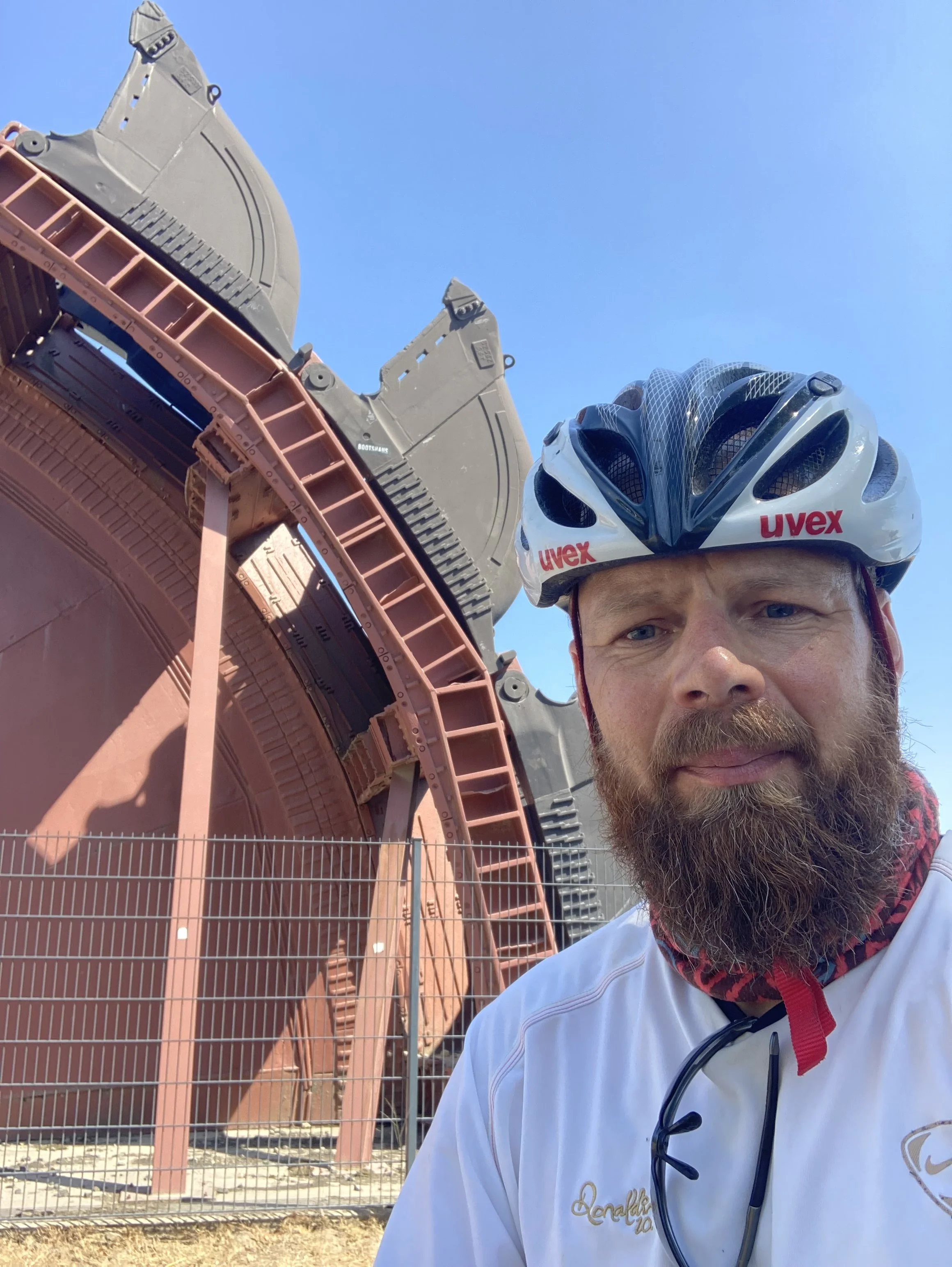
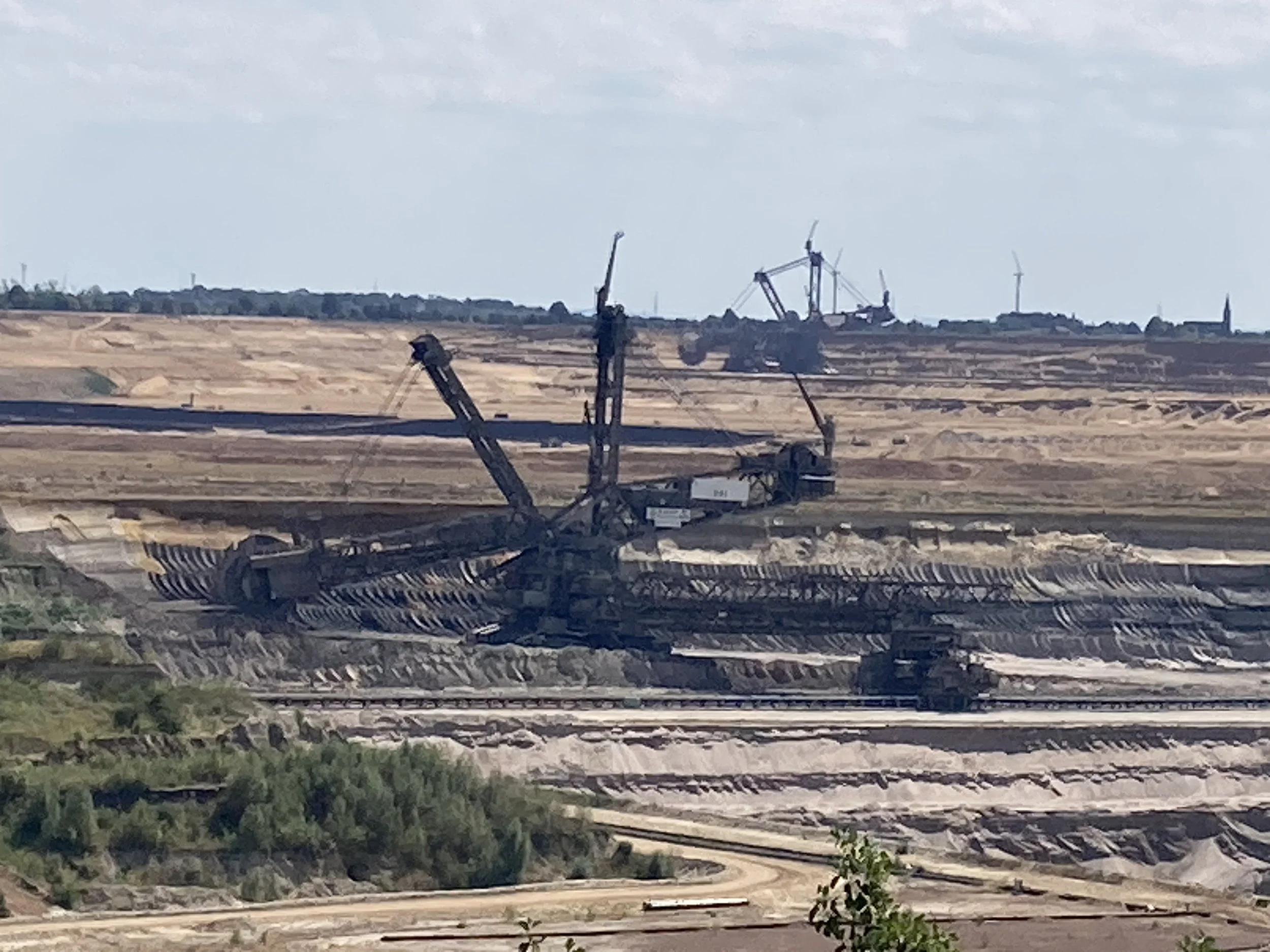
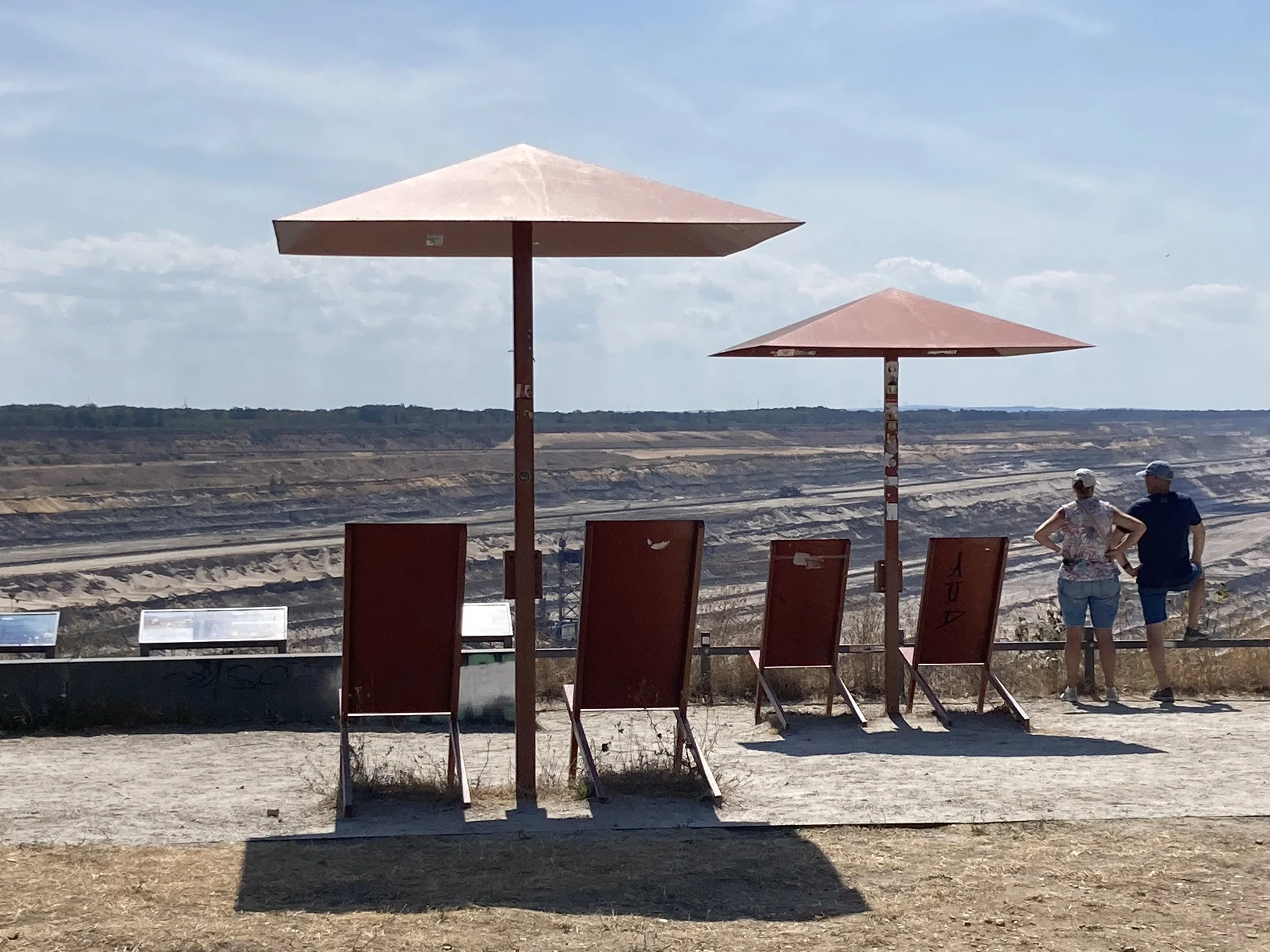
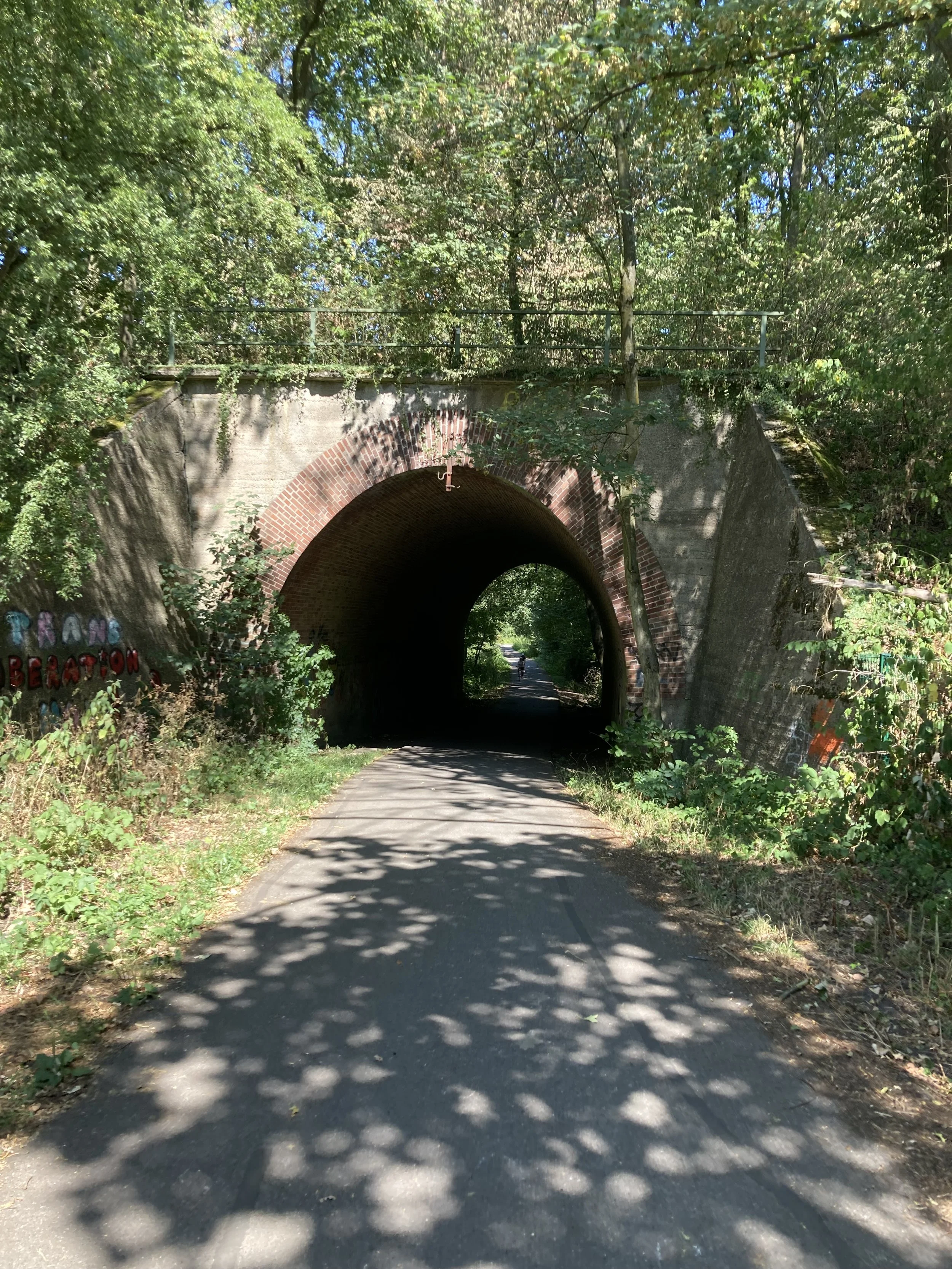
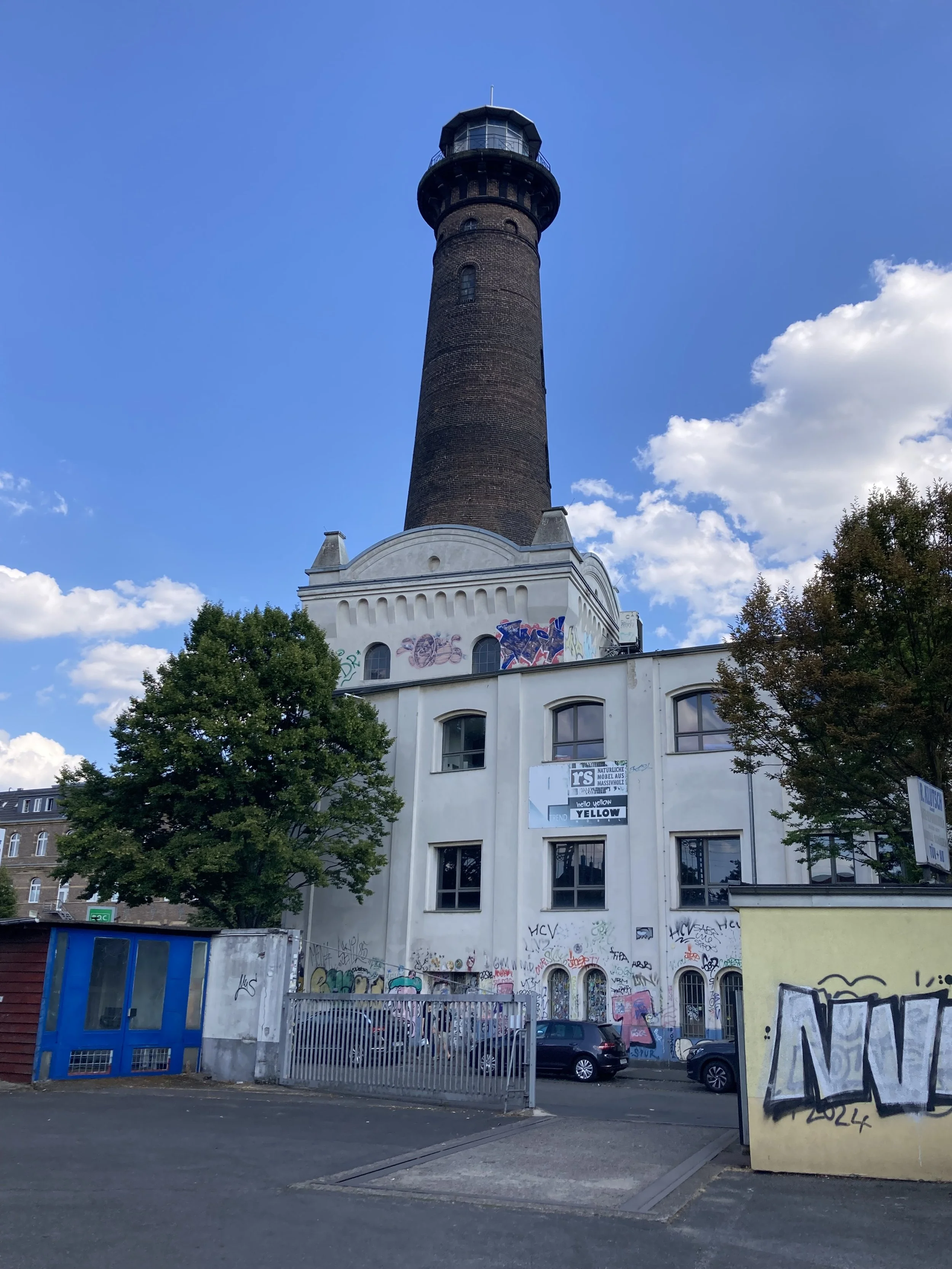
From left to right: near a bucket wheel, radius 10m. Closest machine from the main viewing spot. What it looks like. Guess I’m on a rail trail. Helios inland lighthouse.
I'd picked Cologne because it had a direct connection back to Amsterdam, but find that the only direct connection is ICE, and a ticket will cost 200 euros. The cheap alternative is about 20 euros, but needs three changes and takes four hours. I take it, and even though the connections are only a few minutes long and the trains are delayed, I don't miss anything and get back to Amsterdam without any problems or delays.
I'm pretty happy with this trip! Bagger 291 was the highlight, and so was Baarle-Nassau/Baarle-Hertog. But I'm a bit sad, I think I might have seen all the good stuff within a few days of Amsterdam, and the next excursion won't be so good.